
Copa Libertadores 2026 Final: Estudiantes vs Palmeiras — Date, Time, Tickets, How to Watch and Full Preview
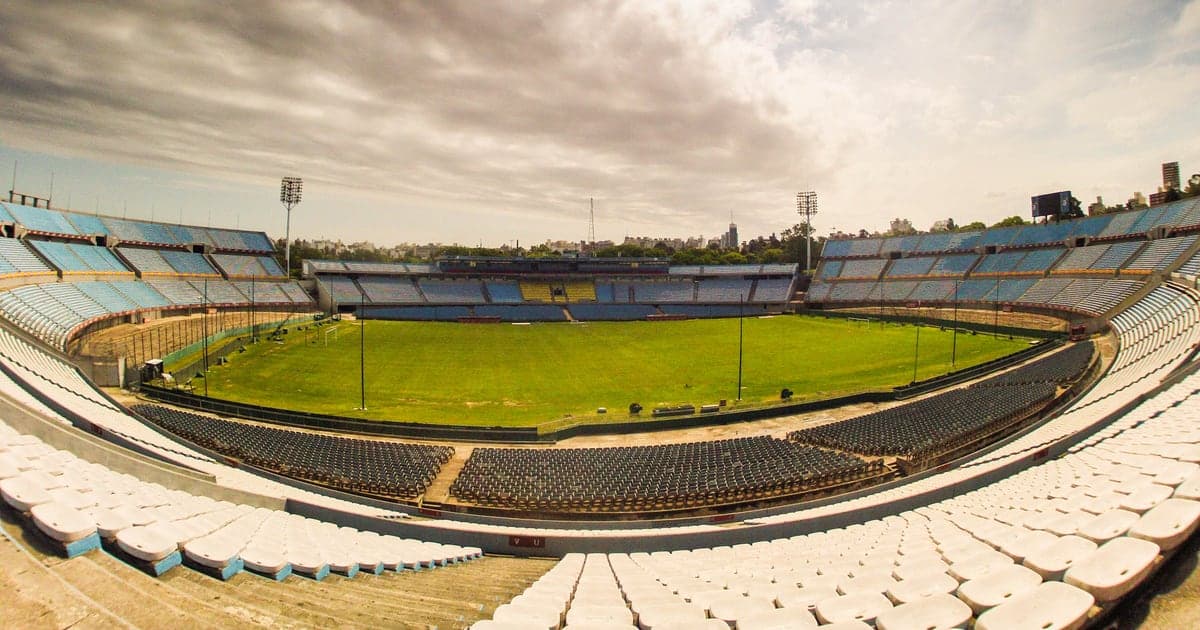
The 2026 Copa Libertadores final is set: Estudiantes de La Plata against Palmeiras, one match, Saturday November 28, 2026 at the Estadio Centenario in Montevideo. Both finalists came through penalty shootouts in the semifinals, the pairing replays the 1968 final, and a title for Estudiantes would end seven straight Libertadores won by Brazilian clubs. This guide collects everything you need — date, time, tickets, TV, how each side got here, who is missing, and what to expect — and it will be updated as CONMEBOL confirms the remaining details.
The 2026 Libertadores Final at a Glance
Match: Estudiantes de La Plata (Argentina) vs Palmeiras (Brazil). Date: Saturday, November 28, 2026. Venue: Estadio Centenario, Montevideo, Uruguay. Format: a single match, no home-and-away legs — if it is level after 90 minutes the final goes to extra time and, if needed, a penalty shootout.
Estudiantes are playing their sixth Libertadores final and the first since their 2009 title; they are chasing a fifth. Palmeiras, three-time champions (1999, 2020, 2021), are playing for a fourth and were runners-up as recently as 2025, when they lost 1-0 to Flamengo.
What Time Is the Final? Kickoff Time by Country
CONMEBOL had not officially published the kickoff time at the time of writing. The fixture data for the match lists 21:00 UTC, which is 18:00 in Montevideo, Buenos Aires, São Paulo, Santiago and Asunción. If that time is confirmed, it is 16:00 in Colombia, Peru and Ecuador, 17:00 in Bolivia and Venezuela, 15:00 in Mexico City, 16:00 US Eastern and 22:00 in Spain.
Treat those conversions as provisional until CONMEBOL announces the official time — we will update this page when it does.
How to Watch the Libertadores Final on TV and Streaming
The Libertadores is broadcast across the continent by its licensed media partners. For the final, coverage in Spanish-speaking markets is reported on ESPN and Disney+ Premium. Brazilian outlets also list TV Globo, GE TV and Paramount+ for the Brazilian audience, and other channels such as Fox Sports appear in some countries.
Rights vary by country, so check your local listings in the days before the match. The final is also a good moment to warm up with the pre-match trivia before kickoff.
Tickets and Travel to Montevideo
Tickets for the final are digital only. They are bought through CONMEBOL's official ticketing platform and app, the code is activated on matchday in the app, and you must show a physical ID or passport that matches the name on the ticket.
At the time of writing the allocation per club and the final prices had not been announced; the clubs are expected to communicate them through their own channels. Early estimates put Estudiantes' travelling support at around 40,000 fans, but that is only an estimate.
For fans coming from Buenos Aires, Montevideo is reachable by direct ferry (about two and a half hours), by ferry to Colonia plus bus (about four and a half hours), by plane (around 50 minutes) or by road (around eight hours). Demand for November 26-28 is expected to push prices well above normal, so book early and only through official sellers.
Estadio Centenario: The Stage for the Final
The Centenario was built for and opened with the first FIFA World Cup, hosting the 1930 final (Uruguay 4-2 Argentina), and FIFA declared it a Historic Monument of World Football in 1983. No stadium has hosted more Libertadores finals — 20 and counting — and its most recent was the 2021 final, when Palmeiras beat Flamengo 2-1 after extra time.
It is also the ground where Estudiantes won their first Libertadores: the 1968 final was settled in a playoff there. More on that below.
Estudiantes de La Plata's Road to the Final
Group stage (9 points): Independiente Medellín 1-1 Estudiantes, Estudiantes 2-1 Cusco, Estudiantes 1-1 Flamengo, Cusco 1-1 Estudiantes, Flamengo 1-0 Estudiantes and Estudiantes 1-0 Independiente Medellín.
Knockouts: they beat Universidad Católica 4-1 on aggregate in the Round of 16 (1-1, then 3-0 in Chile), edged Corinthians 2-1 on aggregate in the quarterfinals (1-1, then 1-0 away), and eliminated defending champions Flamengo in the semifinals: 0-0 in La Plata, 0-0 at the Maracanã, then 3-2 on penalties thanks to three saves from Fernando Muslera.
Across 12 matches Estudiantes won 4, drew 7 and lost only once in 90 minutes, scoring 12 and conceding 7. They are among the hardest teams in the tournament to beat — and not a prolific one.
Palmeiras' Road to the Final
Group stage (11 points): Junior 1-1 Palmeiras, Palmeiras 2-1 Sporting Cristal, Cerro Porteño 1-1 Palmeiras, Sporting Cristal 0-2 Palmeiras, Palmeiras 0-1 Cerro Porteño and Palmeiras 4-1 Junior.
Knockouts: they beat Cerro Porteño 2-1 on aggregate in the Round of 16 (1-1 away, 1-0 at home), then needed penalties twice. In the quarterfinals they beat LDU de Quito 4-3 on penalties after a 1-0 home win and a 3-2 defeat in Quito. In the semifinals they beat Fluminense 2-1 at the Maracanã, lost the second leg 1-0 at the Nubank Parque to a late Hércules goal, and won the shootout 5-3 — Carlos Miguel saving Nonato's penalty.
Across 12 matches Palmeiras won 6, drew 3 and lost 3 in 90 minutes, scoring 17 and conceding 11 — more goals, but also more risk.
A Rematch of the 1968 Final
This is not just another final: Estudiantes and Palmeiras already met for the 1968 title. Estudiantes won the first leg 2-1 in La Plata, Palmeiras won the second 3-1 in São Paulo, and a playoff was needed. It was played at the Estadio Centenario on May 16, 1968: Estudiantes 2, Palmeiras 0 — the first of three straight Libertadores titles for Osvaldo Zubeldía's side.
Fifty-eight years later the same two clubs return to the same stadium to settle the same trophy.
Estudiantes: Key Players and the Baltasar Rodríguez Suspension
The headline name is goalkeeper Fernando Muslera, 40, who saved three penalties against Flamengo and will play the final in his home country. His countryman Alexander Medina, nicknamed “Cacique”, is the coach. Up front, Guido Carrillo is the club's all-time top scorer in the Libertadores, and veteran defender Marcos Rojo anchors the back line. Edwuin Cetré, who missed his penalty in the semifinal shootout, is one of the Colombians in the final.
Estudiantes' first confirmed absence is midfielder Baltasar Rodríguez, who was sent off with a second yellow card in the semifinal second leg and will miss the final. Local reports say Medina will have to rework his midfield.
Palmeiras: Key Players and Abel Ferreira
Palmeiras are coached by Abel Ferreira, who was on the bench for the club's back-to-back titles in 2020 and 2021. Carlos Miguel is the goalkeeper who stopped Nonato's penalty in the semifinal; Gustavo Gómez, Maurício, Ramón Sosa, Joaquín Piquerez and Marlon Freitas all scored in that shootout, and Colombian winger Jhon Arias is the other Colombian in the final.
No Palmeiras suspension for the final has been reported so far.
What to Expect: The Matchup
On the numbers, this is a defence-first side against the more productive one: Estudiantes drew seven of their 12 matches and lost just one, while Palmeiras scored 17 goals but lost three times in 90 minutes. Estudiantes did not score in either semifinal leg; Palmeiras were taken to penalties in two consecutive rounds.
Our read: expect a tight, low-scoring match where set pieces, the goalkeepers and Estudiantes' reshaped midfield decide a lot. With both sides having just survived shootouts, extra time and even penalties are a real possibility — and that makes Muslera and Carlos Miguel two of the most important players on the field.
Extra Time and Penalties: How the Final Is Decided
The final is a single match. If the score is level after 90 minutes, the match goes to extra time and then to a penalty shootout if still tied — the same rules that decided both semifinals this year, where the second legs finished 0-0 and 1-0 and went to penalties.
Why This Final Is Historic
Brazilian clubs have won each of the last seven Libertadores — Flamengo in 2019, Palmeiras in 2020 and 2021, Flamengo in 2022, Fluminense in 2023, Botafogo in 2024 and Flamengo in 2025. The last Argentine champion was River Plate in 2018. A win for Estudiantes would end that streak and bring Argentina to 26 titles; a win for Palmeiras would take Brazil to 26 and Palmeiras to four.
Argentina and Brazil each have 25 Libertadores titles, so whoever lifts the trophy on November 28 puts their country in front.
The Uruguayan Angle
The final has a strong Uruguayan flavour: Muslera and Medina are both Uruguayan, and Joaquín Piquerez is a regular for Palmeiras. Muslera said it will be “nice” to play a decisive match in front of his own people, and called the Centenario “another temple of football.”
Final FAQ
When is the 2026 Copa Libertadores final? Saturday, November 28, 2026. Where is it? Estadio Centenario, Montevideo. Who is playing? Estudiantes de La Plata vs Palmeiras. Is it one match or two? One single match. What time? The official time is pending from CONMEBOL; the fixture data lists 21:00 UTC (18:00 in Montevideo).
Who has more Libertadores titles? Estudiantes have 4 (1968, 1969, 1970, 2009) and Palmeiras have 3 (1999, 2020, 2021). Who is suspended? Estudiantes' Baltasar Rodríguez, for his red card in the semifinal. Have they met in a final before? Yes — the 1968 final, won by Estudiantes in a playoff at the Centenario.